
Every Google Ads click on a term you already rank for organically raises one question: did that ad win a new visit, or just steal an organic one?
Separate budgets can’t answer that. Put paid and organic side by side and the overlap shows itself immediately, along with exactly where each channel earns its keep.
What Is the Difference Between SEM and SEO?
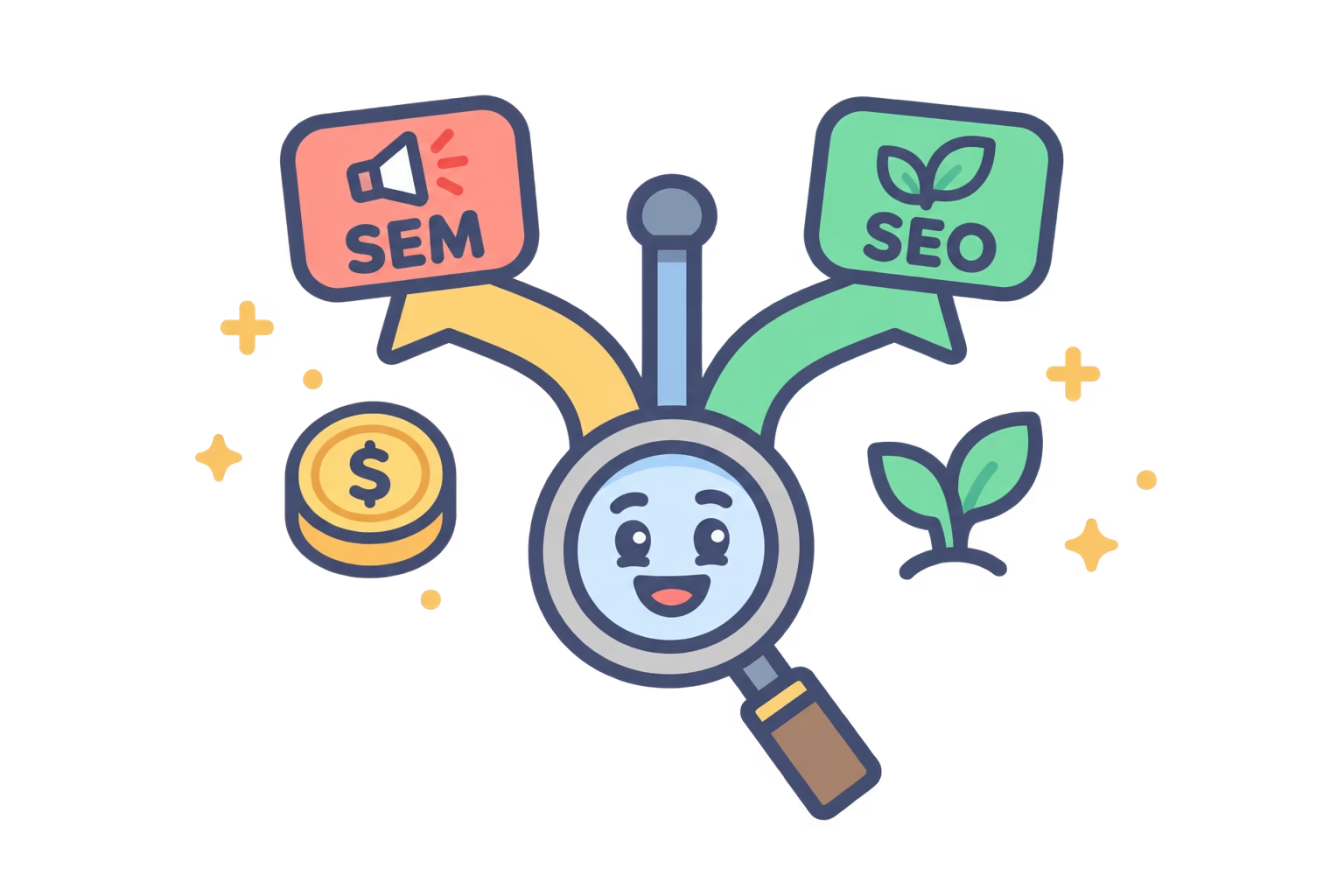
Search engine marketing can mean paid search alone, or a strategy spanning both paid and organic. SEO covers organic visibility only. No paid component, ever.
This guide sticks with the broader definition. Paid and organic decisions collide on the same keywords, the same landing pages, and the same budget line.
What SEM Covers Today
SEM terminology varies by team. One agency reserves it for Google Ads. Another stretches it across the whole search strategy.
Red Bike Marketing defines SEM as paid traffic acquisition specifically, separate from SEO. Confirm which meaning a source intends before you compare reports.
What SEO Covers Today
SEO covers technical site health, intent-led content, internal linking, and authority building. No media cost per organic click. Real investment all the same, just a different kind.
Buying visibility and earning it are two different economics entirely.
How Do the Cost and Timeline for Paid and Organic Search Compare?
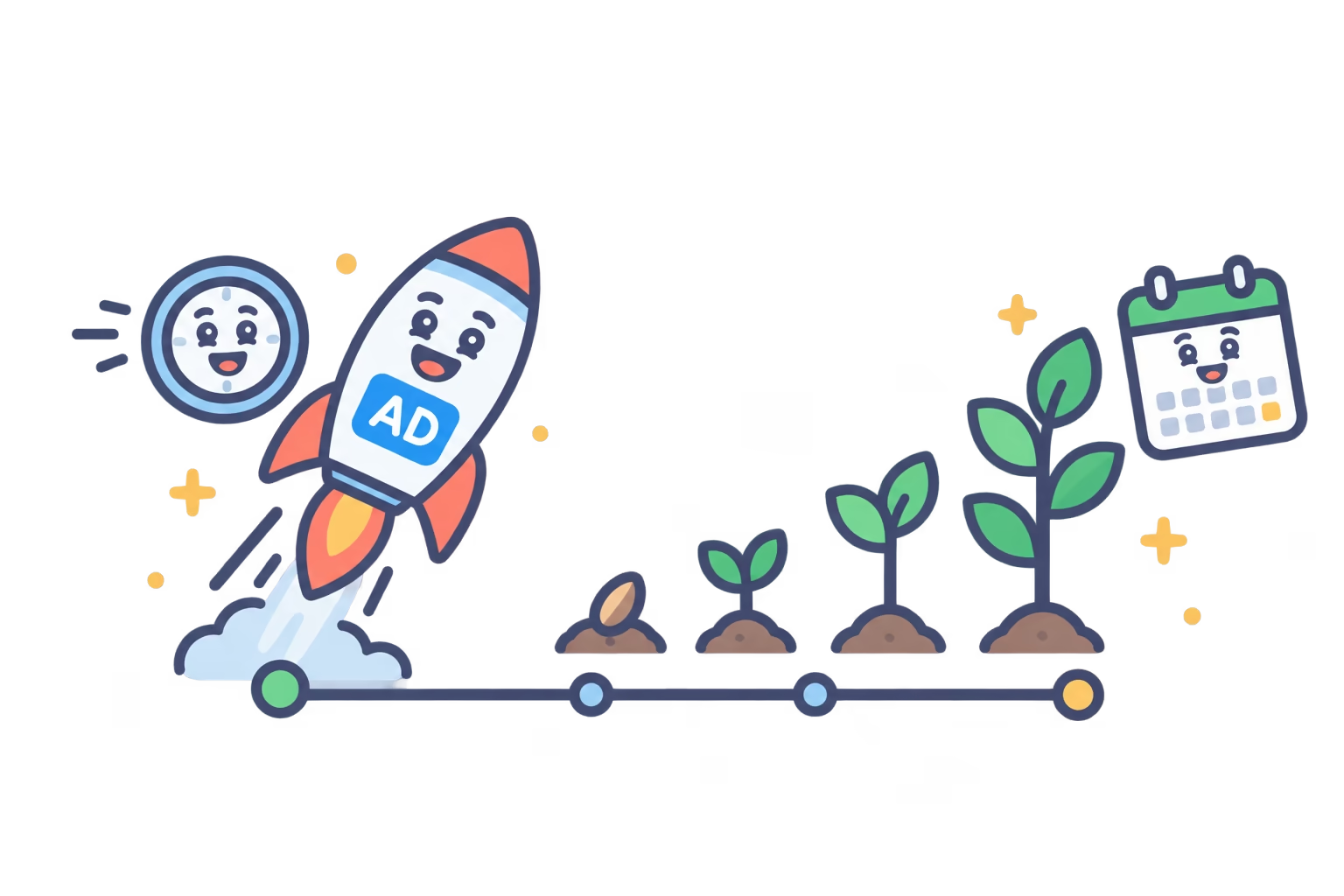
Paid search buys visibility through an auction. Traffic can start the moment ads go active. Organic rankings take months to build, sometimes longer.
No minimum term on paid media, either. Teams pause, adjust, or scale a campaign the same day budgets change.
Organic moves slower because more depends on it: content quality, technical health, site authority, and what competitors are doing in the same results.
That split is how most SEM campaigns run in practice: paid for immediate demand, SEO for the visibility that builds underneath it.
Making Google Ads and SEO work together buys flexibility. Neither channel has to carry the whole strategy alone.
| Factor | Paid Search | Organic Search |
|---|---|---|
| Cost model | Media cost per click, plus campaign management | Content, technical, and authority investment |
| Time to traffic | Can begin after ads are approved and activated | May require months of sustained work |
| Scalability | Expands through added budget and eligible demand | Expands through stronger pages and site authority |
| When investment stops | Ad traffic stops when campaigns stop | Rankings may continue, weaken, or disappear |
When Paid Wins
Paid search suits launch deadlines, new domains, limited-time offers, and uncertain keyword intent. No waiting for a page to rank.
Test messaging, demand, and landing pages first. Fund the bigger organic program once you know what actually works.
When Organic Wins
Organic search suits durable topics, the ones that stay relevant across a long sales cycle. A ranking page keeps pulling clicks with no added cost per visit.
Less dependence on the ad auction, too. But run both channels without shared keyword data, and a different cost shows up instead.
Where Do Paid and Organic Search Overlap, and Why Does That Cost Money?

Overlap happens when a paid ad and an organic page chase the same query. It costs money the moment that ad redirects a click the organic result would have captured anyway.
Not every overlapping click is wasted spend. An ad can defend a brand term, claim more space on the results page, or push a distinct offer the organic listing doesn’t mention.
Incrementality decides it. Would that click, or that conversion, have happened without the ad?
Common causes:
- Brand campaigns nobody switched off
- Paid campaigns launched without a look at existing organic rankings
- SEO and PPC reports built on two separate keyword lists
Picture a page already sitting second organically for a competitive term, with a paid campaign bidding on that exact query at a real cost per click. If the ad is mostly catching clicks the organic listing would have earned for free, the spend buys a thinner blended margin, not new demand.
Why Brand-Term Overlap Deserves Scrutiny
Brand terms deserve extra scrutiny. The company site often already sits first organically, yet paid coverage can still earn its keep: deterring competitors, or promoting an offer the organic listing skips.
Once a rival starts bidding on that same brand term, the calculation changes. A defensive ad next to a competitor’s ad can justify itself even at position one organically.
Whether Google Ads affect organic rankings is a separate question entirely. Overlap is about click allocation and cost, not ranking influence.
How to Spot Overlap Before It Compounds
Line up paid spend, paid conversions, organic clicks, and organic position next to each keyword. Two separate reports will never show you that relationship.
Start with one filter: any keyword in the top three organically that still has paid spend attached. That’s where incremental value is least likely.
Flag it. Test a bid reduction or a pause before calling the spend wasted.
The evidence, not a hunch, decides which channel carries each keyword.
How Do You Build a Combined Paid and Organic Search Strategy?

Audit your organic rankings first. Then group keywords by channel, test paid demand, fund the organic opportunities that prove out, and review the overlap on a fixed schedule.
1. Audit Current Organic Rankings
Check the organic position and landing page for every keyword you’re about to target with paid. Do this before a single ad goes live.
Record conversion data too, where it exists. A ranking alone proves nothing about business value.
Pull impression share and average position from Search Console, not just whether the term cracks the top ten. Position eight still leaves real ad exposure on the table.
2. Group Keywords by Channel
Sort keywords into three groups:
- Paid only: The keyword receives paid traffic without measurable organic visibility.
- Organic only: The keyword receives organic traffic without active paid spend.
- Overlapping: The keyword has paid activity and organic visibility.
Check for keyword cannibalization between your own organic pages while you’re at it. Different problem, same audit.
Revisit the grouping whenever a new page launches or a campaign structure changes. Both quietly shift keywords between groups, and nobody updates the list by hand.
3. Test Lower Bids on Strong Organic Terms
Find the terms ranking in the top three organically. Lower the bid, or pause the ad, as a controlled test, not an assumption of waste.
Compare clicks, conversions, and acquisition cost before and during. Keep the paid coverage that’s earning its keep.
Give it two to three weeks minimum. A short dip in paid clicks often just means the organic listing absorbed the demand, not that you lost it.
4. Use Paid Search to Test Keyword Intent
Run the unproven keywords through paid first, before committing months to an organic content program. Measure audience fit. Measure conversions.
Paid data also exposes a mismatch between search intent and the landing page, and that finding shapes ad copy and organic content alike.
Track click-through rate and conversion rate separately. A keyword can pull plenty of clicks and still convert at zero, which tells you it isn’t ready for an organic content investment.
5. Invest in Organic Content for Proven Terms
Once a paid keyword proves it converts, ask whether it earns a durable organic page. Build the content around the intent it proved, not just the original phrase.
Keep the paid coverage running while the page builds visibility. Pull spend back only once the organic result proves it can carry the demand alone.
Brief the page around the actual queries the paid campaign surfaced, not just the target keyword you started with. Paid data almost always turns up related intent worth covering in the same place.
6. Review Overlap Every Reporting Cycle
Campaigns shift. Rankings shift.
Demand shifts. A one-time audit goes stale fast, so review the overlap every reporting cycle instead.
Clear measurement makes that repeatable, not another spreadsheet rescue mission six months from now.
Tie it to the same cadence as budget planning, monthly for most accounts, so the findings actually change next period’s bids instead of sitting in a report nobody opens again.
How Do You Measure Paid and Organic Search Performance Together?

Measure cost and conversions by keyword, across both paid and organic. Channel totals alone can’t tell you whether the two channels complement each other or just duplicate the same clicks.
Combine Google Ads and Google Search Console data around one shared keyword structure. Same conversion definitions. Same reporting periods.
| Metric | What It Measures | What It Helps Decide |
|---|---|---|
| Blended cost per acquisition | Paid media and search investment relative to conversions | Whether a keyword group is efficient across both channels |
| Share of search | Paid and organic visibility across a keyword group | Where the site lacks coverage or relies on one channel |
| Overlap rate | Paid spend attached to keywords with organic visibility | Where to test bid reductions or budget shifts |
Why Single-Channel Attribution Hides Overlap
A PPC report can look efficient. An SEO report can show strong rankings for the same terms. Neither one, on its own, reveals whether the combined effort is efficient.
Put both datasets side by side before forecasting or reallocating a dollar. Duplication and coverage gaps only show up at the keyword level, never above it.
Shared metrics turn the common SEM questions into decisions grounded in account data instead of a guess.
Search Engine Marketing FAQs
What Is SEM vs SEO?
SEM can describe paid and organic search together, as one strategy. SEO covers organic visibility only.
In everyday use, SEM often just means paid search. Check which meaning a team is using before comparing numbers.
Is SEM the Same as PPC?
PPC is a payment model: an advertiser pays per click. It’s one piece of paid search, not the whole picture.
SEM can mean paid search alone, or the broader mix of paid and organic. Context decides whether the two terms are actually interchangeable.
What Is an Example of SEM in Practice?
A team runs Google Ads on a new product query while building an organic landing page for that same intent, in parallel.
Paid tests the demand and the conversion potential fast. Organic builds the durable visibility, for whichever queries prove worth it.
Do You Need Both Paid and Organic Search?
You can run either channel alone, but each comes with a trade-off. Paid buys speed. Organic cuts your per-click dependence over time.
Run both, and you’re balancing speed, control, and durability at once. The right mix follows your deadlines, your competition, and what you already rank for.
How Long Does Organic Search Take Compared With Paid Search?
Paid search can pull clicks the moment ads clear approval and go live. Organic search asks for months of technical, content, and authority work first.
Neither one guarantees a result. Competition, landing-page quality, targeting, and the site’s own condition all move the outcome.
What Is a Reasonable Budget Split Between Paid and Organic Search?
No universal split exists. Allocate by deadline, keyword economics, current rankings, and proven conversion value, not a rule of thumb.
Use paid where speed or testing matters most. Fund organic where durable visibility can cut reliance on media spend over time.
Heavy keyword overlap and thin margins usually pull budget toward organic. A brand-new market with no rankings yet usually leans on paid until organic content earns enough authority to compete.
Can Paid and Organic Search Cannibalize Each Other?
Yes. A searcher can click the ad even when the same site already ranks organically for that exact query.
That doesn’t make every overlapping ad wasteful, though. Test whether paid coverage actually lifts total clicks or conversions before touching a single bid.
It matters most on high-value branded or near-brand terms, where the ad and the organic listing chase the identical intent, so that extra click rarely means new demand.
Compare both channels against the same keywords and the same outcomes. That’s the only answer that holds up.
See Your Own Paid and Organic Overlap
Doing this manually means exporting Google Ads, exporting Google Search Console, then matching both files by keyword by hand. Every time.
SERP Smoothie connects both accounts through OAuth instead. Its channel overlap dashboard puts paid and organic data in one place.
Keyword gaps, duplicated coverage, budget you could shift right now. All visible in the same view. Try it against your own account with a 7-day trial.
